Across Latin America, the commercial and public construction sectors are undergoing a massive structural shift. Developers, engineering firms, and general contractors are no longer content relying solely on external third-party commercial suppliers to meet their project timelines, budget constraints, and structural standard demands. Instead, a rapidly growing number of regional builders are choosing to invest directly in localized manufacturing equipment to secure their operational supply chains. In recent years, actively searching for a high-performance concrete plant for sale(planta de concreto en venta) has transformed from an option into a primary strategic priority for construction companies aiming to gain full, uncompromised control over material costs, project scheduling, and long-term business scalability.
This widespread transition toward self-reliant material production is largely driven by fast-paced regional urbanization, expanding national infrastructure programs, and persistent regional logistics challenges. By fully integrating dedicated batching equipment into their daily field operations, contractors can effectively safeguard their profit margins, enforce rigorous quality parameters, and position their businesses to win larger commercial, industrial, and public works tenders across diverse geographical terrains.
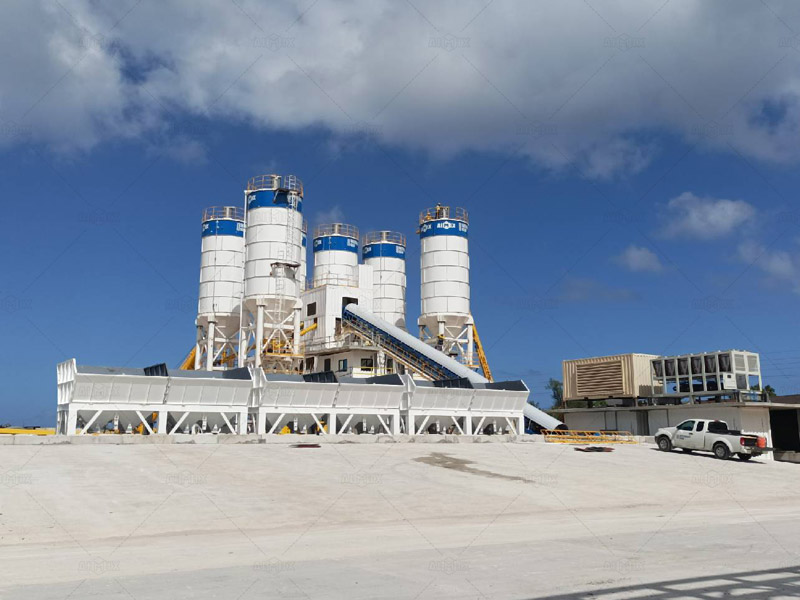
Mitigating Supply Chain Risks and Logistics Bottlenecks
Operating across Latin American landscapes often involves navigating inherently complex geography, isolated project environments, and highly unpredictable road conditions. Depending entirely on commercial third-party vendors for ready-mixed concrete leaves construction firms exceptionally vulnerable to unforeseen material delays, severe urban traffic congestion, and material degradation or premature setting during extended transit times.
Overcoming Regional Distribution Challenges
In countries featuring dynamic topographies—ranging from high-altitude Andean plateaus to dense coastal cities and remote tropical forests—delivering fresh, high-grade mixtures on schedule presents constant operational hurdles. When construction contractors own and operate their own dedicated equipment on or near the work site, they successfully eliminate transit uncertainties and guarantee a constant, uninterrupted flow of freshly mixed structural materials directly to the pour site.
- Elimination of Job Site Downtime: Work crews and heavy machinery remain fully active without waiting idle for third-party mixer trucks to arrive.
- Substantial Freight and Fuel Savings: Removing long-distance commercial transportation fees significantly reduces overall site overhead costs.
- Feasibility in Remote Locations: Major mining, highway, bridge, and rural infrastructure projects become far more viable when batching occurs right at the job site.
Strategic Machinery Investments Across Key Regional Markets
While market conditions vary from nation to nation, the strategic push toward full material self-sufficiency is widespread across South and Central America. For instance, the exceptionally high engineering standards of modern urban developments have sparked a strong demand for advanced concrete plants in Chile(plantas de hormigón en Chile), where engineering firms focus heavily on stringent seismic resistance and long-lasting urban infrastructure. Meanwhile, expanding civil infrastructure, road network expansion, and mining development have accelerated the adoption of a reliable concrete plant in Bolivia, enabling domestic contractors to overcome steep terrain obstacles, bypass remote supply gaps, and maintain steady construction progress in high-altitude environments.
| Market Region | Primary Operational Driver | Core Strategic Benefit |
|---|---|---|
| Chile | Strict seismic standards & rapid urban development | Rigid material quality control & immediate production response |
| Bolivia | Remote project sites & severe terrain logistics | Uninterrupted site supply & dramatic reduction in transport fees |
| Broader Latin America | National infrastructure investments & cost volatility | Supply chain protection, lower material risk & improved profit margins |
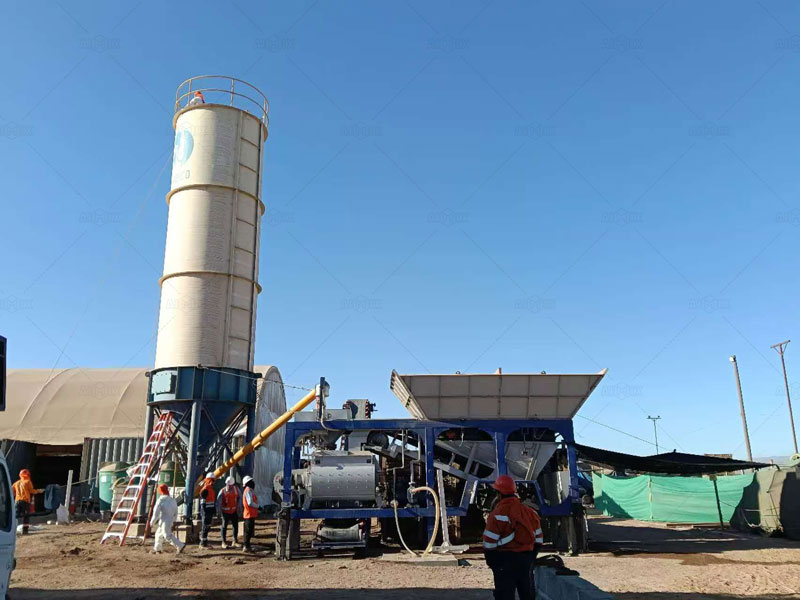
Controlling Concrete Quality and Technical Specifications
Long-term structural integrity and safety rely entirely on precise mixture consistency. Commercial ready-mix suppliers serving multiple clients often struggle to deliver uniform material grades due to varying aggregate sources, fluctuating moisture levels, and extended transit durations. Owning an in-house batching system empowers contractors to monitor and calibrate every single component down to the exact weight, water ratio, and aggregate proportion.
Precision Batching and Specialized Engineering Formulations
Modern high-rise towers, highway bridges, industrial slabs, and hydraulic foundations require unique, highly technical concrete formulations that off-site commercial plants cannot always supply on demand. By running a dedicated on-site setup, site engineers can dynamically tweak batch parameters to match complex structural requirements on short notice.
- Automated Moisture Calibration: Integrated digital sensors constantly adjust water-to-cement ratios to match ambient humidity and aggregate dampness.
- Accurate Admixture Dosing: Precise automated control over chemical retarders, accelerators, and plasticizers optimizes setting times and compressive strength.
- Strict Aggregate Grading: In-house testing ensures coarse and fine aggregates perfectly match engineering standards prior to mixing.
Whether an enterprise requires a heavy-duty stationary setup for multi-year residential developments or a highly flexible, mobile ready-mix concrete plant(planta de concreto premezclado) for linear highway and pipeline infrastructure, direct equipment ownership guarantees that every cubic meter poured meets rigid quality compliance rules.
Improving Project Delivery and Commercial Competitiveness
In today’s competitive construction landscape, finishing projects ahead of time or strictly on schedule directly dictates a contractor’s profitability and industry reputation. By transitioning from material buyers to material producers, construction firms build a commanding advantage during public bidding and private contract negotiations.
Accelerating Execution Timelines
Having a dedicated production facility operating adjacent to the job site allows pouring schedules to run continuously without being restricted by commercial supplier business hours, weekend closures, or regional road transit bans. This operational freedom vastly accelerates project milestones, reduces administrative overhead, and allows firms to reassign machinery and workforce teams to new revenue-generating projects much faster.
Financial Growth and Business Scalability
Although acquiring industrial machinery requires an upfront investment, the financial return over time is substantial. Procuring a reliable ready-mix concrete plant transforms an ongoing, volatile operational expense into a valuable capital asset that builds corporate equity. Furthermore, forward-thinking contractors can sell surplus concrete capacity to smaller neighboring job sites, turning their on-site production unit into an additional, profitable revenue stream.
Positioning for Long-Term Regional Growth
As Latin American nations continue to modernize their urban housing, commercial hubs, energy facilities, and transportation corridors, contractor independence will become the standard benchmark for industry success. Establishing localized, in-house manufacturing capabilities—whether deploying a mobile unit for remote terrain or investing in a dedicated concrete plant in Bolivia(planta de concreto Bolivia) to serve challenging Andean infrastructure projects—equips construction enterprises with the flexibility needed to withstand market fluctuations, overcome geographical logistics barriers, and deliver superior structural quality. By adopting independent production systems today, regional contractors are securing their operational autonomy and paving the path toward sustainable, long-term market leadership.