Long-distance concrete transportation can significantly affect slump, workability, placement efficiency, and final construction quality. For contractors comparing a self-loading concrete mixer for sale, the transportation method should be considered alongside production capacity. A concrete mix may leave the production point with the correct slump, but extended travel time, vibration, temperature changes, and repeated drum rotation can alter its properties before it reaches the work site.
An AS-MK24 self-loading concrete mixer for sale(autohormigonera en venta) can help address these challenges by integrating aggregate loading, weighing, mixing, and transportation into one machine. Instead of producing concrete at a distant batching plant and transporting every batch over long distances, contractors can produce fresh concrete closer to the actual pouring location.
This approach is particularly useful for rural roads, mountain construction, residential projects, irrigation works, and other sites where transportation routes are long or difficult. Understanding how transportation affects concrete properties is essential for selecting the right equipment and maintaining consistent construction quality.
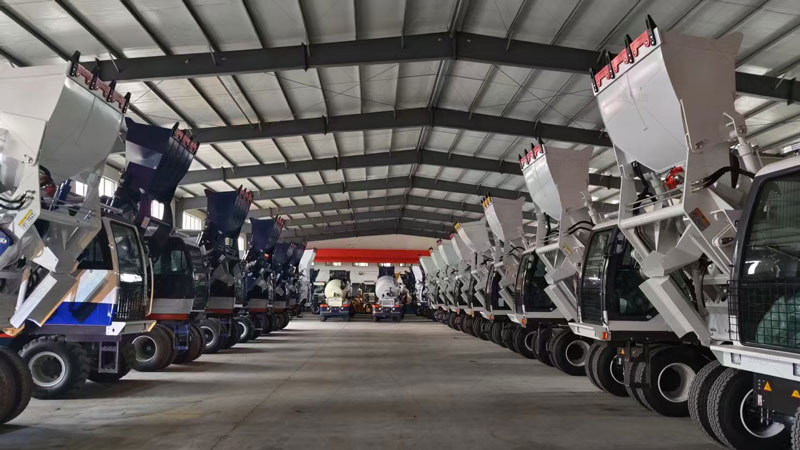
Why Does Long-Distance Transportation Reduce Concrete Slump?
Concrete slump measures its consistency and provides an indication of workability. During transportation, several factors can cause the slump to decrease, making the concrete more difficult to place and compact.
Extended Mixing and Drum Rotation
Concrete is not simply stored inside a mixer during transportation. The drum continues rotating to prevent segregation and premature setting. However, prolonged agitation can increase friction within the mixture and gradually change its workability.
When transportation takes much longer than the planned delivery cycle, the concrete may arrive with a lower slump than it had at the production point. This effect can become more noticeable with low water-cement ratio mixtures or mixes containing supplementary cementitious materials.
Temperature and Moisture Loss
High ambient temperatures can accelerate cement hydration and shorten the available working time. Evaporation may also contribute to moisture loss, particularly in hot, dry, and windy environments.
For projects in these conditions, reducing the distance between concrete production and placement can be more effective than trying to compensate for excessive slump loss after delivery.
How Does Slump Loss Affect Construction Quality?
Slump loss can directly influence concrete placement, compaction, finishing, and ultimately the quality of the finished structure.
Reduced Workability During Placement
Concrete with excessive slump loss becomes harder to discharge, spread, pump, and compact. Workers may need additional time and effort to achieve proper consolidation, particularly around reinforcement or inside narrow structural sections.
If concrete becomes too stiff, workers may be tempted to add water at the job site. However, uncontrolled water addition can alter the designed water-cement ratio and negatively affect strength and durability. It is therefore preferable to manage the mixture design and transportation process before concrete reaches the construction area.
Risk of Segregation and Poor Finishing
Improper transportation can also cause segregation, where coarse aggregate separates from the cement paste. A non-uniform mixture makes placement and finishing more difficult and can result in inconsistent concrete properties.
Maintaining controlled mixing throughout transportation is therefore important, especially when the construction site is far from the concrete production point.
Can a Self-Loading Mixer Help With Remote Projects?
For projects located far from commercial batching plants, a self-loading concrete mixer(mixer autocargable) can reduce dependence on long-distance concrete delivery. The machine can load aggregates, add cement and water, mix the batch, and transport fresh concrete directly to the required location.
Shorter Production-to-Placement Distance
Instead of producing concrete at a centralized plant and transporting it for a long distance, contractors can establish mobile concrete production closer to the work zone. This reduces unnecessary travel time and gives the construction team greater control over when each batch is produced.
This advantage is especially valuable where road conditions are poor or where conventional transit mixers cannot efficiently reach the pouring area.
Flexible Batch Production
A mobile mixer also allows production to follow the actual construction schedule. Contractors can produce smaller quantities when required instead of transporting large volumes that may spend considerable time in transit or waiting before placement.
This flexibility can be particularly useful for projects with multiple pouring locations or changing daily concrete requirements.
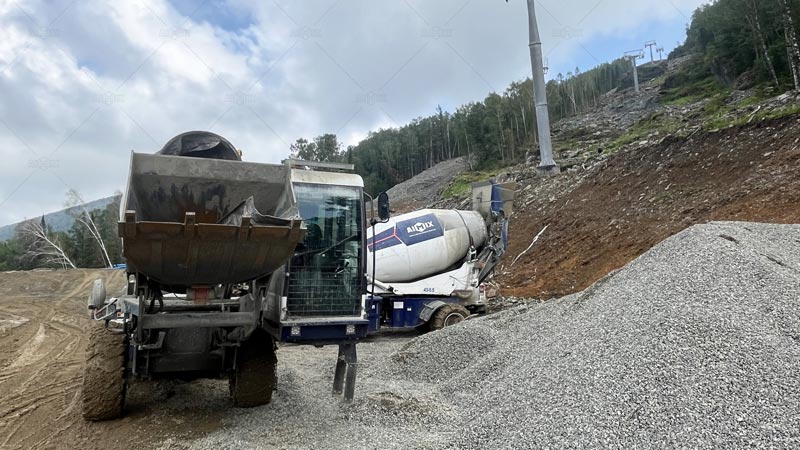
What Should Contractors Consider When Choosing a Mixer?
When evaluating popular self-loading concrete mixer models(modelos populares de autohormigonera), contractors should consider more than nominal production capacity. Transportation distance, terrain, batch size, concrete demand, and access conditions all influence whether a particular machine is suitable.
- Production capacity: Choose a mixer that can meet the project’s hourly and daily concrete requirements.
- Travel conditions: Consider steep slopes, narrow roads, unpaved routes, and long internal transportation distances.
- Mixing performance: Check the mixing system and drum capacity to maintain consistent concrete quality.
- Weighing accuracy: Accurate batching helps maintain consistent mix proportions between batches.
- Maintenance support: Remote projects should consider spare parts availability, technical support, and operator training.
How Can Contractors Maintain Concrete Quality During Transportation?
Several practical measures can reduce slump loss. First, minimize unnecessary transportation time and coordinate concrete production with the pouring schedule. Second, use a mix design appropriate for the expected travel and environmental conditions. Third, maintain suitable drum rotation during transportation and avoid unnecessary delays before discharge.
For remote projects, producing concrete closer to the placement area can be one of the most effective strategies. An integrated mixer allows contractors to reduce the number of separate transportation and production steps while maintaining greater control over fresh concrete.
When Is a Mobile Mixer a Better Option?
A mobile solution becomes particularly attractive when a project has dispersed work areas, limited access to commercial concrete suppliers, or frequent changes in pouring locations. In these situations, transportation time can become a major part of the concrete production cycle.
For example, the AS-MK24 self-loading concrete mixer(autohormigonera AS-MK24) offers a nominal output of 24 m³/h while combining loading, weighing, mixing, and transportation functions. This type of integrated configuration can help contractors produce fresh concrete where and when it is needed instead of depending entirely on long-distance delivery.
Ultimately, popular self-loading concrete mixer models should be evaluated according to the complete project workflow rather than equipment capacity alone. By reducing unnecessary transportation time and producing concrete closer to the placement point, contractors can better control slump, improve workability, and maintain more consistent construction quality.