Lima is undergoing rapid urban redevelopment, with projects ranging from residential communities and commercial buildings to transportation infrastructure. However, many construction sites are located close to schools, hospitals, offices, and densely populated neighborhoods, making noise control a major challenge. Choosing the right concrete plant Peru solution has become an essential step for contractors seeking to meet environmental regulations while maintaining project efficiency.
Modern batching technology allows contractors to reduce noise emissions without sacrificing production capacity. Whether investing in a small concrete plant for restricted urban jobsites or evaluating a concrete plant for sale with advanced environmental features, construction companies can improve compliance and reduce community complaints. Similar environmental trends can also be observed in the growing market for concrete plant in Chile, where urban projects increasingly require quieter equipment.
Why Noise Control Matters in Lima’s Urban Projects
Urban construction differs significantly from projects in remote industrial zones. Equipment operates close to residential buildings, requiring contractors to balance productivity with environmental responsibility.
Main Sources of Noise at Concrete Plants
The primary noise sources include:
- Aggregate feeding and loading operations
- Twin-shaft mixer operation
- Conveyor belts and transfer points
- Air compressors and pneumatic systems
- Truck movement inside the batching yard
A well-designed concrete plant Peru(planta de concreto Perú) configuration addresses each of these sources through engineering improvements instead of simply reducing production.
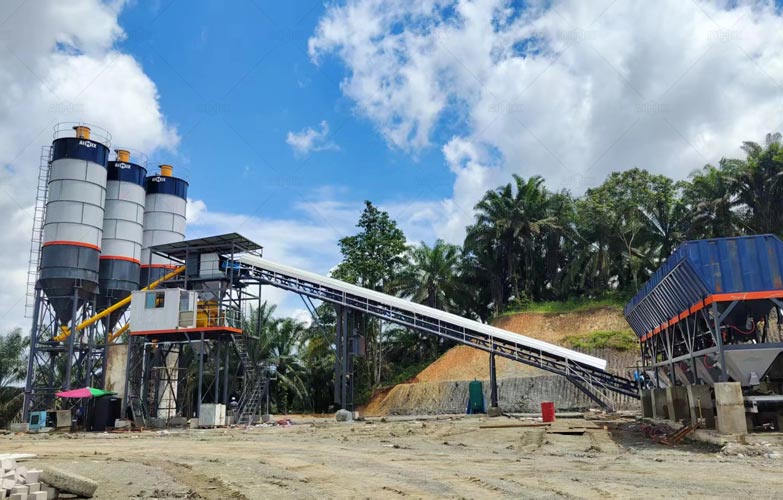
Environmental Requirements Driving Equipment Selection
As Lima expands its redevelopment efforts, contractors increasingly face stricter environmental expectations from project owners and local authorities.
Reducing Community Disturbance
Noise pollution can interrupt nearby businesses, schools, and residential communities. Contractors that invest in a modern concrete plant for sale(planta de hormigón en venta) equipped with noise reduction technology are better positioned to avoid complaints, project interruptions, and potential regulatory issues.
Supporting Sustainable Urban Development
Environmental protection now extends beyond dust collection and wastewater recycling. Noise management has become another important indicator of responsible construction, especially for projects seeking higher sustainability standards.
Features of Low-Noise Concrete Batching Plants
Modern equipment manufacturers incorporate multiple technologies that work together to reduce operational noise while maintaining productivity.
Enclosed Mixing Systems
Fully enclosed mixer buildings prevent sound from spreading directly into surrounding neighborhoods. Sound-insulating panels and vibration-resistant structures further reduce overall operating noise.
Low-Noise Drive Components
Premium motors, reducers, and bearings generate less vibration and operate more smoothly than conventional equipment. These upgrades improve reliability while lowering acoustic emissions.
Optimized Aggregate Feeding
Instead of allowing aggregates to fall freely from excessive heights, modern feeding systems use optimized transfer angles and rubber-lined chutes that significantly reduce impact noise.
Intelligent Control Systems
Automatic production scheduling minimizes unnecessary idling and reduces frequent motor starts and stops. Operators can also optimize production batches to maintain stable equipment operation throughout the day.
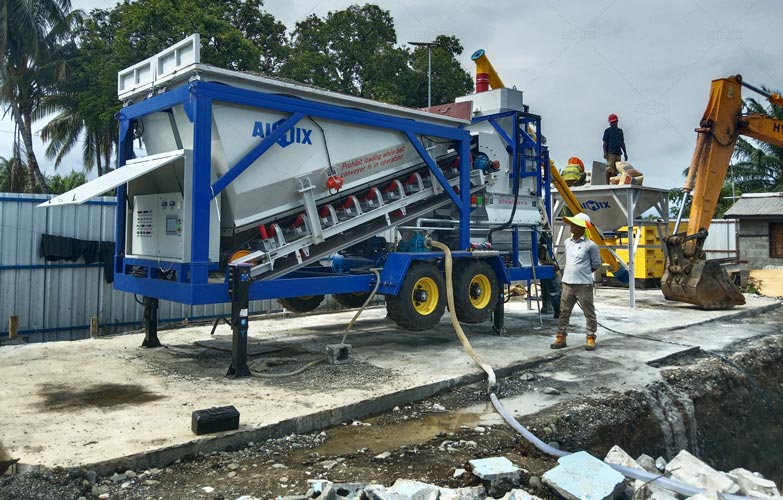
Choosing the Right Plant for Urban Construction
Different redevelopment projects require different production capacities. Contractors should evaluate both project scale and site limitations before selecting equipment.
| Project Type | Recommended Plant | Main Advantage |
|---|---|---|
| Small municipal repairs | small concrete plant | Compact footprint and low noise |
| Residential developments | Medium stationary plant | Balanced capacity and efficiency |
| Large infrastructure projects | High-capacity concrete plant Peru | Continuous production with environmental controls |
A small concrete plant is often the preferred choice(Una planta de concreto pequeña suele ser la opción preferida) for urban redevelopment because it requires less installation space, produces lower operating noise, and can be relocated more easily when projects are completed.
Additional Strategies for Noise Reduction
Equipment selection is only one part of an effective environmental management plan.
Site Layout Optimization
Placing mixers, generators, and compressors farther from sensitive buildings immediately reduces perceived noise. Temporary sound barriers can also improve site performance without affecting productivity.
Preventive Maintenance
Loose bolts, worn bearings, damaged belts, and insufficient lubrication often increase equipment noise. Regular inspections keep machinery operating efficiently while extending service life.
Operator Training
Proper operating procedures help prevent unnecessary acceleration, sudden loading, and equipment misuse. Well-trained operators contribute significantly to maintaining a quieter construction environment.
Lessons from Regional Markets
Many contractors compare equipment experiences across South America before making purchasing decisions. The growing demand for concrete plant in Chile(creciente demanda de planta de hormigón en Chile) demonstrates how environmental regulations are encouraging manufacturers to develop quieter, cleaner, and more energy-efficient batching solutions.
Likewise, suppliers offering a concrete plant for sale increasingly include optional soundproof enclosures, intelligent control systems, and vibration isolation packages as standard or optional configurations. These features allow contractors in Peru to remain competitive while meeting evolving environmental requirements.
Balancing Compliance and Productivity
Some contractors assume that lower noise means lower production efficiency, but modern technology proves otherwise. Advanced batching plants can simultaneously improve productivity, reduce maintenance costs, and lower environmental impact.
For companies planning future investments, selecting a reliable concrete plant Peru solution means evaluating not only production capacity but also long-term operating costs, environmental performance, maintenance requirements, and adaptability to urban construction conditions. Whether choosing a compact small concrete plant for redevelopment work or a larger concrete plant for sale designed for continuous infrastructure projects, low-noise technology has become a practical investment rather than an optional feature. As successful experiences with concrete plant in Chile continue to demonstrate, quieter batching plants help contractors complete projects efficiently while building stronger relationships with surrounding communities.