Concrete pavement defects rarely originate from a single isolated mistake. Surface scaling, uneven texture, premature cracking, weak edges, and inconsistent slab strength may become visible during or after paving, yet their underlying causes can emerge much earlier during material batching, mixing, transportation, or discharge. For contractors, the challenge is to distinguish production-related deficiencies from problems caused by placement techniques, environmental exposure, subgrade preparation, or curing practices.
A systematic investigation follows the concrete from its constituent materials to the finished pavement. Contractors compare batch records, inspect fresh-concrete properties, examine paving conditions, and evaluate hardened concrete samples to identify where performance began to deviate from specifications. This traceability approach helps teams move beyond superficial repairs and address the underlying cause. It also improves coordination between the stationary batching plant operator, paving crew, quality-control engineer, and project manager on subsequent pours.
Identify the Pavement Defect Before Investigating Production
Distinguish Surface Problems from Structural Deficiencies
The first diagnostic step is to document the defect’s appearance, location, severity, and distribution. Random surface scaling may indicate curing deficiencies or a vulnerable surface layer, while recurring cracks across several paving sections may warrant investigation into concrete properties, slab geometry, joint spacing, or subgrade behavior.
Contractors should map defects against paving dates, batch identification numbers, delivery sequences, and individual placement zones. If several defects occur in concrete supplied during the same production period, a common production-related cause becomes more plausible. However, spatial patterns alone cannot establish causation.
Compare Defects with Construction Conditions
Quality teams should also record ambient conditions, concrete temperature, placement time, curing methods, and the condition of the prepared base. A pavement section that deteriorates near poorly drained areas may have a different underlying problem from one exhibiting widespread scaling across multiple batches.
This initial classification narrows the investigation. It prevents contractors from adjusting the concrete mix to compensate for defects that actually originate in drainage, reinforcement positioning, finishing, or curing.
Review Concrete Production Records for Inconsistencies
Check Mix Proportions and Water-Cement Ratio
Concrete strength and durability depend partly on the proportions of cementitious materials, water, aggregates, and admixtures. Unrecorded water additions can increase the water-cement ratio, potentially reducing strength and increasing permeability, shrinkage, and susceptibility to surface deterioration.
Contractors should compare actual batch quantities with the approved mix design. They should also review whether admixture dosages, cementitious material quantities, and aggregate proportions remained within specified tolerances.
A concrete batching plant for sale provides the production-control point where many of these variables can be recorded and checked. Automated batch reports can help identify deviations that would otherwise remain difficult to trace after the pavement has hardened.
Investigate Aggregate Moisture and Batching Accuracy
Aggregate moisture is a frequent source of inconsistency. Wet aggregates contribute water to the mix, whereas dry aggregates may absorb some of the mixing water. If moisture corrections are inaccurate or outdated, the effective water content can fluctuate even when the batching system dispenses the same nominal quantity of water.
Contractors should examine moisture-test records, aggregate grading, weighing-system calibration, and material stockpile management. Unexpected changes in aggregate proportions may also affect workability, segregation resistance, and finishing behavior.
Examine Fresh Concrete Properties at the Paving Site
Measure Workability and Consistency
Fresh-concrete testing helps determine whether the material arriving at the paving area matches the approved requirements. Depending on the specification, inspections may include slump or other workability tests, concrete temperature, air content, and fresh-concrete density.
Concrete that is too stiff may be difficult to distribute and consolidate uniformly. Excessively workable concrete, particularly when caused by uncontrolled water addition, may exhibit segregation, bleeding, or difficulty maintaining the required pavement profile.
The correct acceptance criteria depend on the mix design and paving method. Contractors should use specified testing procedures rather than relying on visual appearance alone.
Look for Changes Between Consecutive Deliveries
A sudden change in workability between truckloads can create uneven finishing conditions, inconsistent consolidation, and visible differences in surface texture. Quality-control personnel should record each test against its delivery ticket and batch identifier.
When a problem appears, the team can compare the affected load with earlier and later deliveries. This creates a practical link between the physical defect and the production history of the concrete involved.
Trace Problems Through Mixing, Transportation, and Discharge
Check Mixing Uniformity and Delivery Delays
Even an accurately proportioned mix can perform inconsistently if mixing is inadequate or delivery conditions change its properties. Contractors should verify mixing times, mixer operating conditions, loading sequences, and compliance with the approved production procedure.
Long delivery or waiting periods can also affect workability, particularly in hot or windy conditions. Any water or admixture adjustment must follow the approved procedure and be properly documented; uncontrolled additions can introduce new variability.
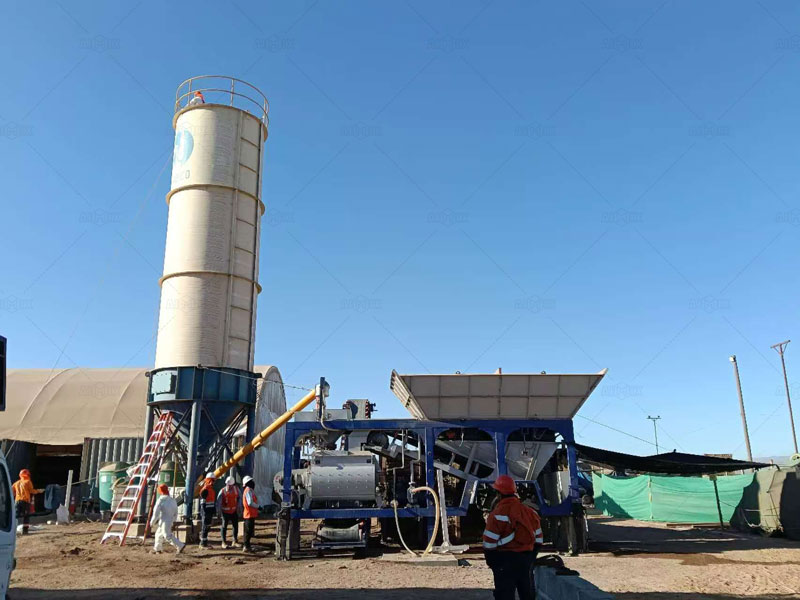
For projects using a mobile concrete plant, production may take place closer to the paving area, potentially reducing transport distance. Nevertheless, mobility does not eliminate the need for calibrated weighing systems, moisture correction, uniform mixing, and documented quality checks.
Inspect Discharge and Material Handling
Concrete may segregate or lose uniformity during unsuitable discharge and handling operations. Contractors should examine whether aggregate separation, excessive rehandling, or interrupted feeding occurred before the material entered the paving process.
If defects repeatedly correspond with a particular discharge sequence or handling arrangement, the investigation should consider both equipment operation and mix characteristics. Neither should be blamed without supporting evidence.

Connect Concrete Production with Paving Equipment Performance
Evaluate Spreading, Vibration, and Surface Finishing
Concrete paving equipment must handle the supplied mix consistently. Material that varies significantly in workability can affect spreading, consolidation, finishing, and the formation of pavement edges.
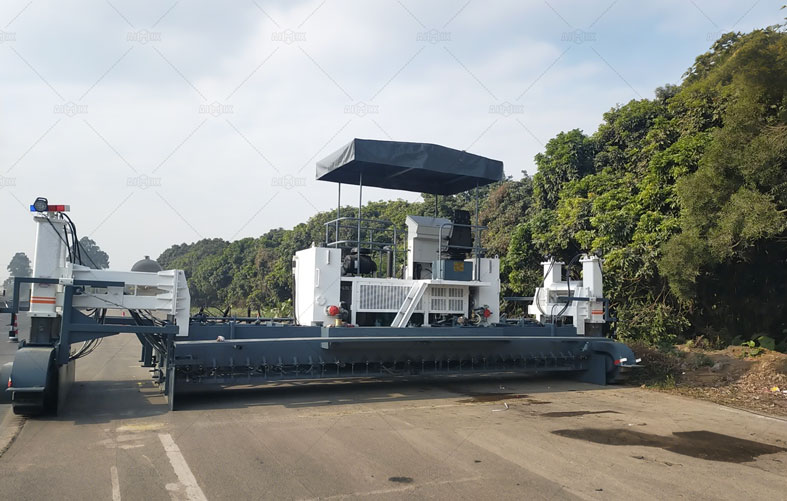
A concrete paving machine operating with a consistent feed can produce a more uniform pavement profile, provided that the machine is correctly configured and operated. Contractors should check paving speed, vibration settings, screed or forming arrangements, and the continuity of concrete supply.
Poor consolidation can leave voids or honeycombing, while unsuitable finishing practices may contribute to surface weakness. These defects can resemble production problems, so equipment settings and operator procedures must be reviewed alongside batch records.
Match Equipment Selection to Project Requirements
When evaluating a concrete paver for sale, contractors should consider the pavement type, required width and thickness, expected production rate, concrete consistency, and specified surface tolerances. Equipment suitability affects placement uniformity, but it cannot compensate for a fundamentally inconsistent mix.
The broader concrete pavement equipment arrangement should also be assessed, including feeding, spreading, vibration, finishing, and joint-forming systems. Each component must work in coordination with the concrete supply rate to prevent interruptions and uneven placement.
Verify the Root Cause Through Testing and Documentation
Compare Field Evidence with Hardened Concrete Results
Once a potential cause has been identified, contractors should test the hypothesis against measurable evidence. Depending on the defect, investigations may include compressive-strength testing, flexural-strength testing, pavement core examination, thickness measurements, air-void analysis, or surface durability assessments.
Results should be compared with the project specifications and the relevant test method. A low strength result alone does not prove that batching caused the problem; sampling, curing of test specimens, placement, and environmental exposure may also influence the findings.
Build a Traceable Quality Record
A complete record connects each affected pavement section to its mix design, batch report, delivery ticket, fresh-concrete test, paving time, equipment settings, curing procedure, and hardened-concrete results. This evidence allows engineers to distinguish recurring production deviations from isolated construction errors.
For projects using a portable concrete batching plant, the same documentation discipline remains essential. Portable equipment still requires suitable calibration, controlled material storage, accurate moisture adjustments, and reliable batch records.
Apply Corrective Actions Before the Next Pour
Correct the Process Rather Than Masking the Defect
If evidence points to moisture-correction errors, contractors should improve aggregate testing and batching adjustments. If workability changes arise during transportation, delivery intervals and approved admixture procedures may require review. If defects correlate with poor consolidation, the paving crew should reassess equipment settings and operating practices.
Corrective actions should be documented and verified during a subsequent trial or paving section. Changes must remain consistent with the approved mix design and engineering requirements.
Coordinate Production and Paving Quality Control
The most effective prevention strategy links the batching plant, delivery fleet, paving crew, and quality-control team through shared records and clear acceptance procedures. Consistent communication helps the team identify deviations early, isolate affected loads, and prevent a local problem from spreading across a larger pavement section.
Conclusion
Tracing pavement quality problems back to concrete production requires a methodical comparison of physical defects, batching records, fresh-concrete test results, handling conditions, and paving operations. Surface deterioration or cracking should never be attributed to a single cause without supporting evidence.
By maintaining batch-level traceability, controlling aggregate moisture and mix proportions, coordinating concrete supply with paving equipment, and verifying corrective actions through testing, contractors can identify the actual source of inconsistency. The result is a more reliable quality-control process, fewer recurring defects, and better long-term pavement performance.