Construction is not a monolithic industry. Every project that breaks ground carries its own constellation of specifications, site conditions, logistical constraints, and performance expectations. A high-rise residential tower in a congested urban core demands entirely different concrete delivery capabilities than a rural bridge rehabilitation or a remote hydroelectric access road. Yet across all these contexts, one requirement remains constant: the equipment must perform precisely as the project demands. For self loading concrete mixer truck manufacturers, this reality makes customization not a premium offering but a foundational obligation. The manufacturers who understand this are redefining what it means to serve the construction industry.
Self-loading concrete mixer trucks occupy a uniquely versatile position in modern construction equipment. They integrate aggregate loading, water dosing, mixing, and discharge into a single self-sufficient unit — eliminating the dependency on batching plants, transit mixers, and separate loading machinery. But this versatility only delivers its full value when the machine is correctly specified for the project at hand. Drum capacity, chassis configuration, discharge geometry, control systems, and drive performance must all align with site realities. Achieving that alignment is the core challenge that drives the customization strategies of leading manufacturers.
Recognising the True Variability of Construction Demands
The Spectrum of Projects Requiring Tailored Concrete Solutions
Construction projects span an extraordinarily wide operational spectrum. At one end sit small-scale residential builds — compact sites with restricted access, modest concrete volumes, and tight budget envelopes. At the other end lie multi-phase infrastructure programmes: dam construction, motorway expansion, port development, and industrial facility builds that demand continuous high-volume concrete production across extended durations and challenging terrain.
Between these poles exists an enormous diversity of project typologies — precast yard operations, agricultural construction, school and hospital programmes, mining infrastructure, and disaster reconstruction work — each with its own operational logic. No single standardised concrete mixer machine configuration can serve all of these contexts with equal effectiveness. A drum sized for high-volume commercial pours is disproportionate and economically inefficient on a small residential site. Conversely, an underpowered unit deployed on a large infrastructure project creates production bottlenecks that cascade through the entire construction schedule.
Manufacturers who acknowledge this variability as a structural feature of the market — rather than an inconvenient complexity — are those who develop genuinely effective customisation frameworks.
Why Standardised Equipment Creates Hidden Project Costs
The economic case for customisation is often obscured by the apparent simplicity of purchasing a standard unit. Upfront procurement costs appear lower. Lead times seem shorter. The decision feels straightforward. But standardised equipment deployed in mismatched project conditions generates a cascade of hidden costs that erode those apparent savings rapidly.
Oversized machines on confined sites create circulation problems, increasing cycle times and elevating operator fatigue. Undersized units on high-demand projects require additional passes to meet pour schedules, burning extra fuel and labour hours. Discharge configurations unsuited to site geometry force awkward positioning manoeuvres that slow production and increase wear on mechanical components. These inefficiencies rarely appear on procurement spreadsheets but manifest unmistakably in project cost overruns and schedule slippage. Customisation eliminates the misalignment at source.
The Architecture of Effective Customisation
Design Flexibility Across Chassis, Drum, and Discharge Systems
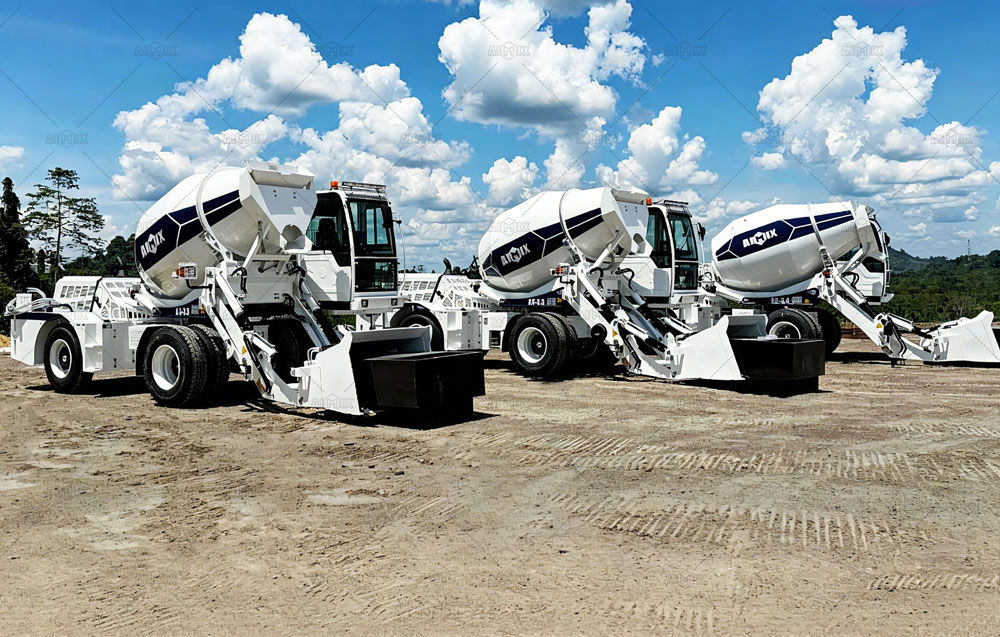
Leading self-loading concrete mixer truck manufacturers structure their customisation capability around three primary design axes: chassis configuration, mixer drum specification, and discharge system geometry. Each axis offers meaningful variation that directly translates to improved site performance when correctly selected.
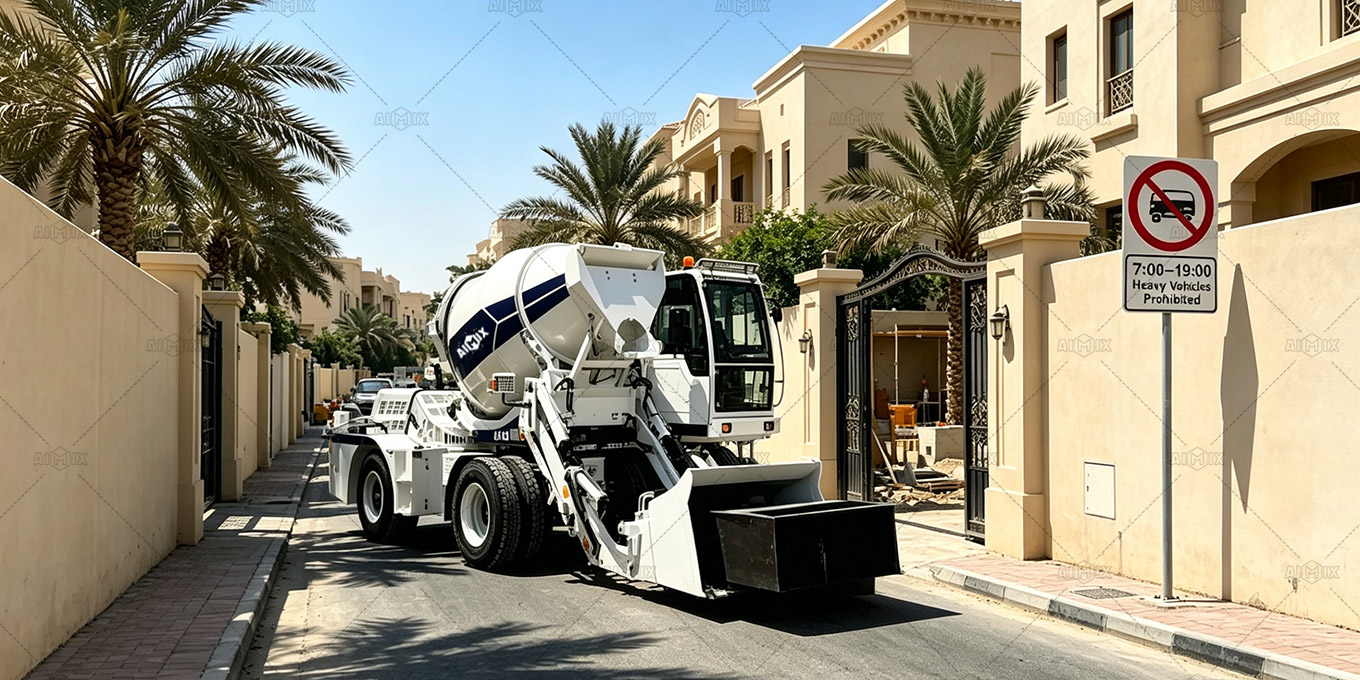
Chassis configuration determines the machine’s terrain capability, turning radius, and load distribution profile. Clients operating on steep gradients or soft ground require chassis engineering optimised for those conditions — reinforced frames, enhanced axle geometry, and drive systems calibrated for traction rather than speed. Urban contractors navigating narrow site access points need compact wheelbases and tight-turn capability that a standard configuration may not deliver.
Drum specification governs both capacity and mix quality. Manufacturers offer volumetric ranges from compact mini concrete mixer units suitable for residential and small commercial work through to high-capacity drums serving large infrastructure pours. Drum geometry — the blade configuration and rotation mechanics — also influences mix homogeneity, a technically critical parameter for structural concrete applications where consistency directly affects compressive strength outcomes.
Discharge system customisation addresses one of the most practically significant variables on any site: where and how concrete is deposited. Rear discharge, side discharge, extended chute configurations, and pump-compatible outlets each serve different placement geometries. A manufacturer that offers genuine flexibility across these options empowers clients to specify a machine that integrates cleanly into their site logistics rather than forcing site operations to accommodate equipment limitations.
Control Systems and Automation as Customisation Dimensions
Modern self-loading mixer trucks increasingly incorporate electronic control systems that govern water dosing precision, drum rotation speed, and load weighing accuracy. These systems represent a significant customisation dimension that progressive manufacturers make configurable to client requirements. Projects operating under strict mix design protocols — structural concrete, prestressed elements, or high-performance pavement applications — benefit from enhanced dosing precision and data logging capability. Simpler applications may prioritise ease of operation over advanced control sophistication. Configuring control systems to match the technical demands of the specific project context is a mark of mature customisation capability.
Collaborative Engagement as the Foundation of Customisation
Pre-Sale Consultation and Site-Specific Analysis
Effective customisation does not begin on the factory floor. It begins in the consultation process, where manufacturers invest time and technical expertise in understanding the precise conditions the machine will operate within. Thorough pre-sale engagement — covering site topography, access constraints, concrete specification requirements, daily production targets, operator skill levels, and maintenance infrastructure availability — generates the informational foundation upon which meaningful customisation decisions are made.
Manufacturers who treat this consultation phase as a commercial formality produce machines that broadly fit most situations adequately. Those who treat it as a genuine technical investigation produce large concrete mixer machine that fit specific situations precisely. The performance differential between these two approaches is substantial and consistently measurable in project outcomes.
Iterative Design Processes and Post-Delivery Support
Customisation extends beyond the initial specification decision. Leading manufacturers employ iterative design processes in which client feedback informs progressive refinement of the proposed configuration before manufacture commences. Prototype reviews, specification validation checks, and engineering dialogue between manufacturer and client ensure that the final machine reflects accumulated insight rather than initial assumptions.
Post-delivery support — including operator training, performance monitoring, and adaptation of settings to evolving site conditions — completes the customisation lifecycle. A machine optimally specified at procurement but poorly operated or inadequately maintained will underperform against its potential. Manufacturers who sustain engagement through the operational life of their equipment demonstrate a commitment to outcomes, not merely to sales. In a construction industry where project success is the only metric that ultimately matters, that commitment is precisely what clients need.